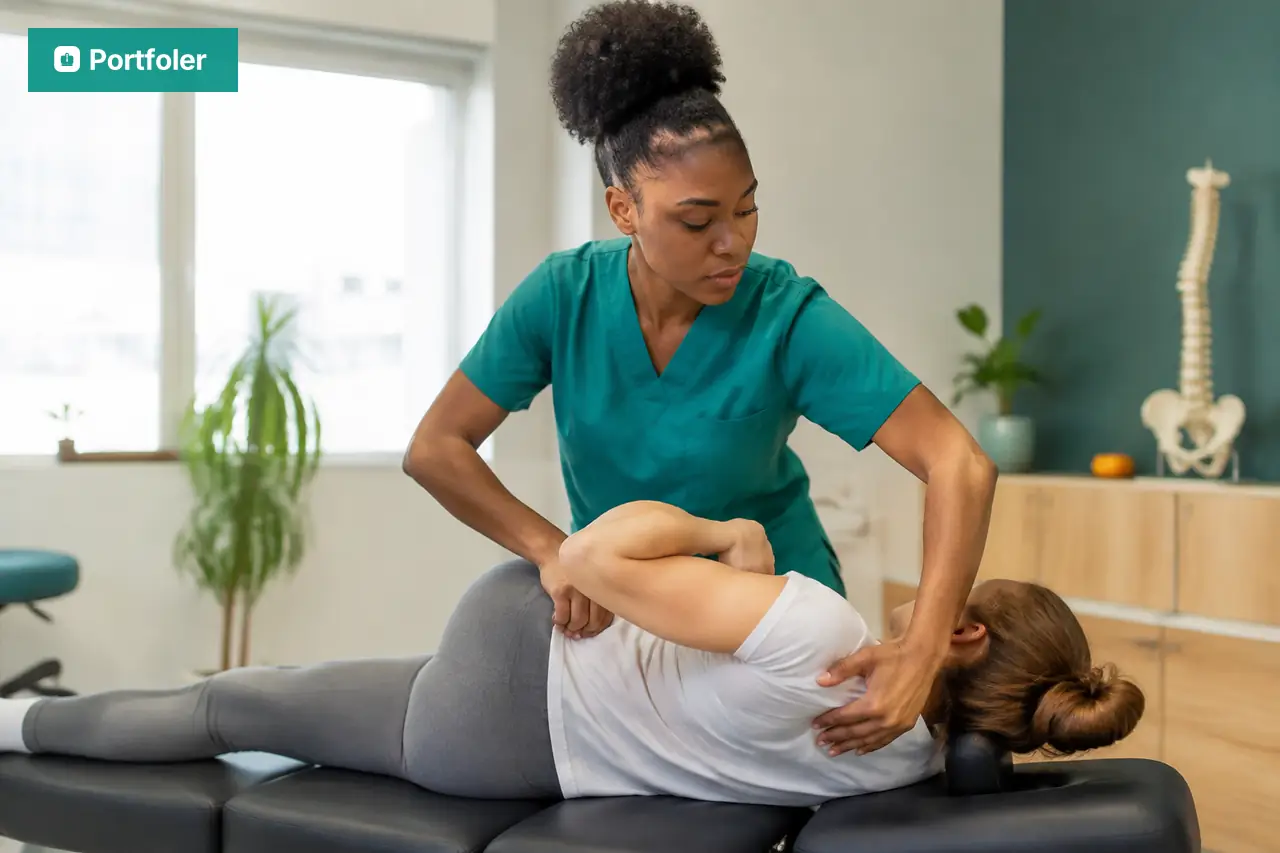
Osteopaths heal with their hands. Back pain, functional disorders, muscular tension, the after-effects of injury or simple imbalances in the body: they look for the cause behind the symptom rather than the symptom alone, and restore mobility to the tissues, session after session. A first-line healthcare profession, overwhelmingly self-employed, where touch and clinical reasoning come before any prescription.
Role description
An osteopath is a healthcare practitioner specialising in the diagnosis and manual treatment of the body's functional disorders. Through palpation, they assess restrictions in the mobility of joints, muscles and tissues, trace them back to their origin, then correct them using manual techniques — structural, muscle-energy, visceral or cranial. They prescribe no medication and perform no instrumental procedures: their tool is the hand, guided by a detailed knowledge of anatomy and physiology.
Where the physiotherapist leads a course of rehabilitation, often on medical referral and over repeated sessions, and where the nurse delivers care and clinical monitoring, the osteopath works as a first point of contact: in many countries the patient consults them directly, without a referral. They do not replace the physician — they know how to recognise what calls for a medical opinion and refer on when needed — but they hold a distinct place, between manual therapy and support for functional wellbeing.
Key responsibilities
- Take the patient's history and identify the signs that require medical referral.
- Perform the osteopathic examination: mobility testing, palpation, postural observation, diagnosis of dysfunctions.
- Build a clinical reasoning that links the presenting complaint to its functional causes.
- Apply the appropriate manual techniques: structural, muscle-energy, articular, visceral, cranial.
- Adapt care to specific populations: infants, pregnant women, athletes, older adults.
- Advise the patient: postural hygiene, everyday movement, relapse prevention.
- Run the practice: scheduling and booking, patient records, invoicing, administrative and ethical obligations.
Required skills
Hard skills: in-depth anatomy and physiology, clinical semiology and knowledge of red flags (medical warning signs), fine palpation, structural and articular techniques, muscle-energy and soft-tissue techniques, visceral and cranial approaches, osteopathic diagnosis and clinical reasoning, musculoskeletal care, and rigorous patient record keeping alongside practice management.
Soft skills: a gift for contact and listening, the ability to build trust, rigour and a capacity for synthesis, teaching skills to explain the treatment, physical stamina, honesty about the limits of one's practice and strict respect for medical confidentiality.
Salaries worldwide
Osteopath pay depends heavily on the country, the regulatory status of the profession and, above all, the practice model: the vast majority of osteopaths are self-employed, and their net income depends directly on their patient base, the location of the practice and running costs. The salary table by country below gives indicative gross annual ranges in local currency. The gaps are real: in some countries osteopathy is a regulated, clearly defined profession, in others it is lightly framed or folded into another healthcare role. Practitioners established for several years, with a loyal patient base and a clear positioning, sit firmly at the top of the range.
Career path
Unlike professions whose title is reached late in a career, you become an osteopath as soon as you qualify, then build your practice over time.
- Entry level (0 – 3 years): first practice setups, locum work, associate roles in a clinic or salaried posts in a centre; gradually building a patient base and consolidating techniques.
- Established (3 – 8 years): an established practice or partnership, a local reputation, first specialisations (paediatrics, sport, women's health).
- Experienced (8 – 15 years): a loyal, recurring patient base, recognised expertise in one field, supervision of trainees, work with sports clubs or companies.
- Expert (15+ years): running a multidisciplinary practice, teaching in an osteopathy school, continuing education, clinical research or supporting elite athletes.
Osteopathy also travels well: practising abroad is possible subject to qualification recognition and, depending on the country, registration with a professional body.
Education & training
Access to the profession and the way it is regulated vary widely from country to country, which makes training a central issue.
- In France, the osteopath title is regulated: it is earned after five years at an institution accredited by the Ministry of Health, leading to an osteopathy diploma and mandatory registration on the professional register.
- In the United Kingdom and Australia, the profession is fully regulated (mandatory registration with the GOsC or AHPRA) and requires a dedicated university degree.
- In the United States, the title "osteopath" (DO) designates a fully licensed physician trained in osteopathic medicine — a very different framework from the non-physician European osteopath.
- In other countries, osteopathy is lightly regulated, practised after a physiotherapy qualification or through private courses whose recognition varies.
Everywhere, post-qualification specialisations (paediatrics, women's health, sports osteopathy) and real clinical experience count for more than the diploma alone.
Industries & opportunities
Osteopaths practise above all in private practice, alone or within a multidisciplinary structure (health centres, allied-health clinics, rooms shared with physiotherapists and physicians). They are also found with sports clubs and federations, in companies (prevention of musculoskeletal disorders), in maternity units and in care homes. Demand for drug-free management of pain, the rise of prevention and public interest in manual therapies sustain the activity over the long term, with a strong entrepreneurial dimension: success rests as much on clinical quality as on running and promoting the practice.
In summary
A community healthcare profession, overwhelmingly self-employed, where you heal with your hands and build success one patient at a time. If you guide your patients towards less pain and more mobility, create your profile on Portfoler.com, showcase your specialisations and attract the patients and partners that fit you.
 United States
 United Kingdom
 Germany
 France
 Canada
 United Arab Emirates
 Morocco
 India
 Spain
 Australia
 Netherlands
 Brazil