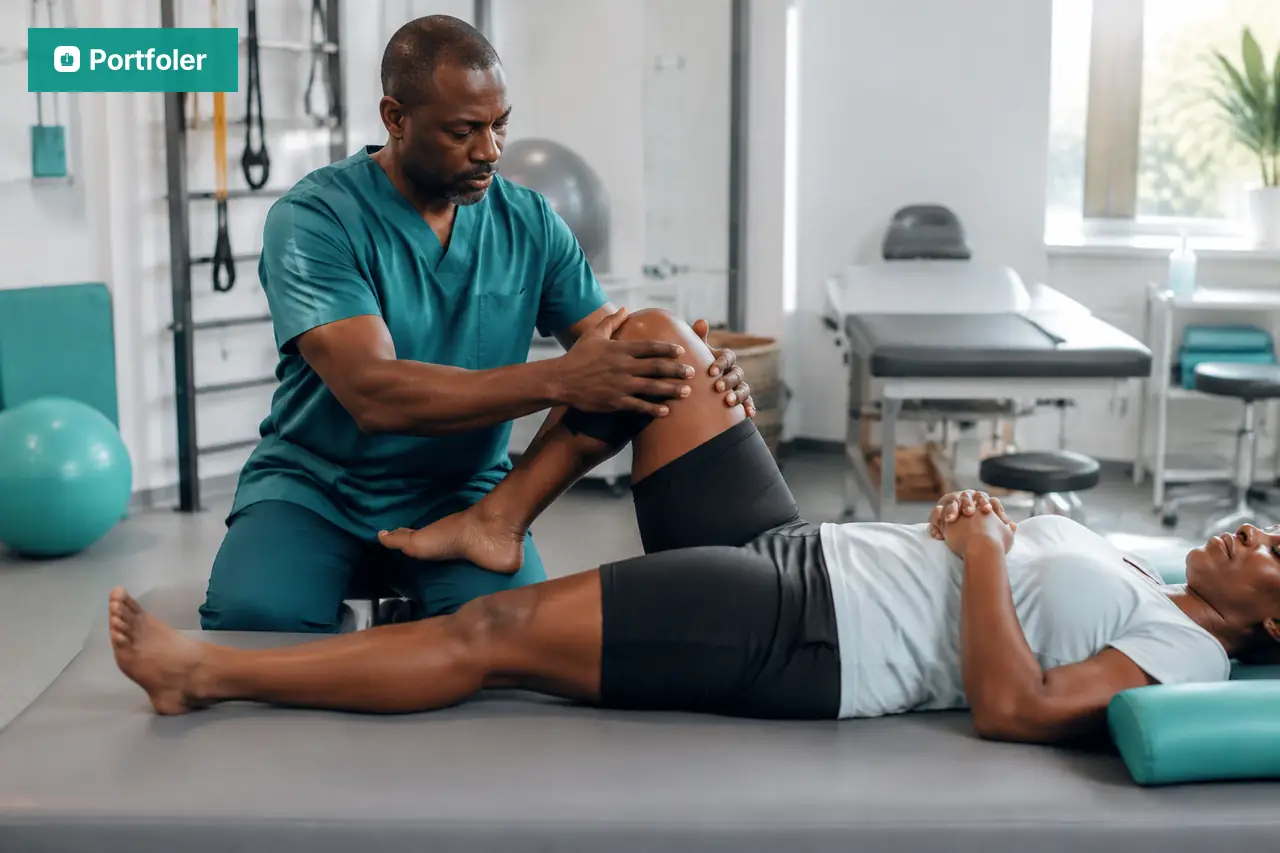
Physiotherapists give movement back to those who have lost it. After a fracture, a stroke, surgery, a respiratory illness or simply with age, they guide the return to independence, session after session. A deeply relational healthcare profession, where the hands come before the prescription.
Role description
A physiotherapist — physical therapist in some countries — is a healthcare professional specialising in rehabilitation and functional recovery. They assess a patient's motor capacity, produce a physiotherapy assessment, then design and deliver a treatment programme built on movement, manual therapy and physical techniques.
The role differs from that of a nurse, focused on care delivery and clinical monitoring, and from that of a pharmacist, focused on medication. Physiotherapists treat through movement, mobilisation and exercise, over long courses of care that build a genuine therapeutic relationship. In most countries they work on medical referral, but they hold growing autonomy over technique selection, and several health systems now allow direct access.
Key responsibilities
- Carry out the initial assessment: history taking, examination of mobility, strength, pain and posture.
- Define rehabilitation goals and a personalised treatment plan.
- Deliver sessions: manual therapy, mobilisations, active exercise, strengthening, stretching.
- Handle specialised rehabilitation: orthopaedic and trauma, neurological, respiratory, pelvic floor, sports, paediatric or geriatric.
- Use instrumental techniques: electrotherapy, therapeutic ultrasound, cryotherapy, gait assistance equipment.
- Educate patients: home exercises, relapse prevention, ergonomics, postural hygiene.
- Maintain patient records, ensure traceability of care and report back to the referring physician.
Required skills
Hard skills: functional anatomy and physiology, biomechanics, physiotherapy assessment, manual therapy, orthopaedic, neurological and respiratory rehabilitation, instrumental physiotherapy, knowledge of pathologies and their contraindications, therapeutic education, patient record keeping.
Soft skills: listening and empathy, teaching ability — half the treatment rests on patient adherence — physical stamina, patience with slow progress, ethical rigour and respect for medical confidentiality.
Salaries worldwide
Physiotherapist pay depends heavily on the country, the health system and above all the practice model: salaried in a hospital or clinic, or self-employed in private practice. The salary table by country below gives indicative gross annual ranges in local currency. Private practitioners with an established patient base, and specialists in elite sport, neurology or pelvic health, sit clearly at the top of the ranges.
Career path
The profession offers several trajectories in every country:
- Entry level (0 – 3 years): hospital, rehabilitation centre or practice cover work, consolidating core techniques.
- Established (3 – 8 years): private practice setup or a permanent institutional post, first post-graduate specialisations.
- Experienced (8 – 15 years): recognised expertise in one field (sport, neurology, respiratory, paediatrics), a loyal patient base, supervision of students.
- Expert (15+ years): running a practice or rehabilitation centre, teaching in training institutes, clinical research, or supporting professional sports teams.
The profession also travels well: practising abroad is possible subject to qualification recognition and, in some countries, a national licensing exam.
Education & training
Entry is regulated everywhere: a state diploma or professional licence is mandatory to practise.
- State diploma in physiotherapy in France (four years after a first year of health studies), delivered by an accredited institute.
- Bachelor's or master's degree in physiotherapy across most of Europe, in Morocco and in Canada; a Doctor of Physical Therapy (DPT) in the United States.
- Mandatory registration with a professional body or register, with continuing education obligations.
Specialisations — manual therapy, sports physiotherapy, pelvic floor and respiratory rehabilitation — are earned post-qualification and clearly raise the market value of the profile.
Industries & opportunities
Physiotherapists practise in private clinics, hospitals, rehabilitation centres, care homes, sports organisations, corporate settings (musculoskeletal disorder prevention), specialised schools and at patients' homes. An ageing population, the rise of chronic conditions and growing investment in prevention keep demand durably above supply in most countries.
In summary
A healthcare profession in demand everywhere, with very low unemployment risk, combining technical expertise, daily human contact and strong professional autonomy. If you guide patients back to movement, create your profile on Portfoler.com, showcase your specialisations and attract the organisations and patients that fit you.
 United States
 United Kingdom
 Germany
 France
 Canada
 United Arab Emirates
 Morocco
 India
 Spain
 Australia
 Netherlands
 Brazil