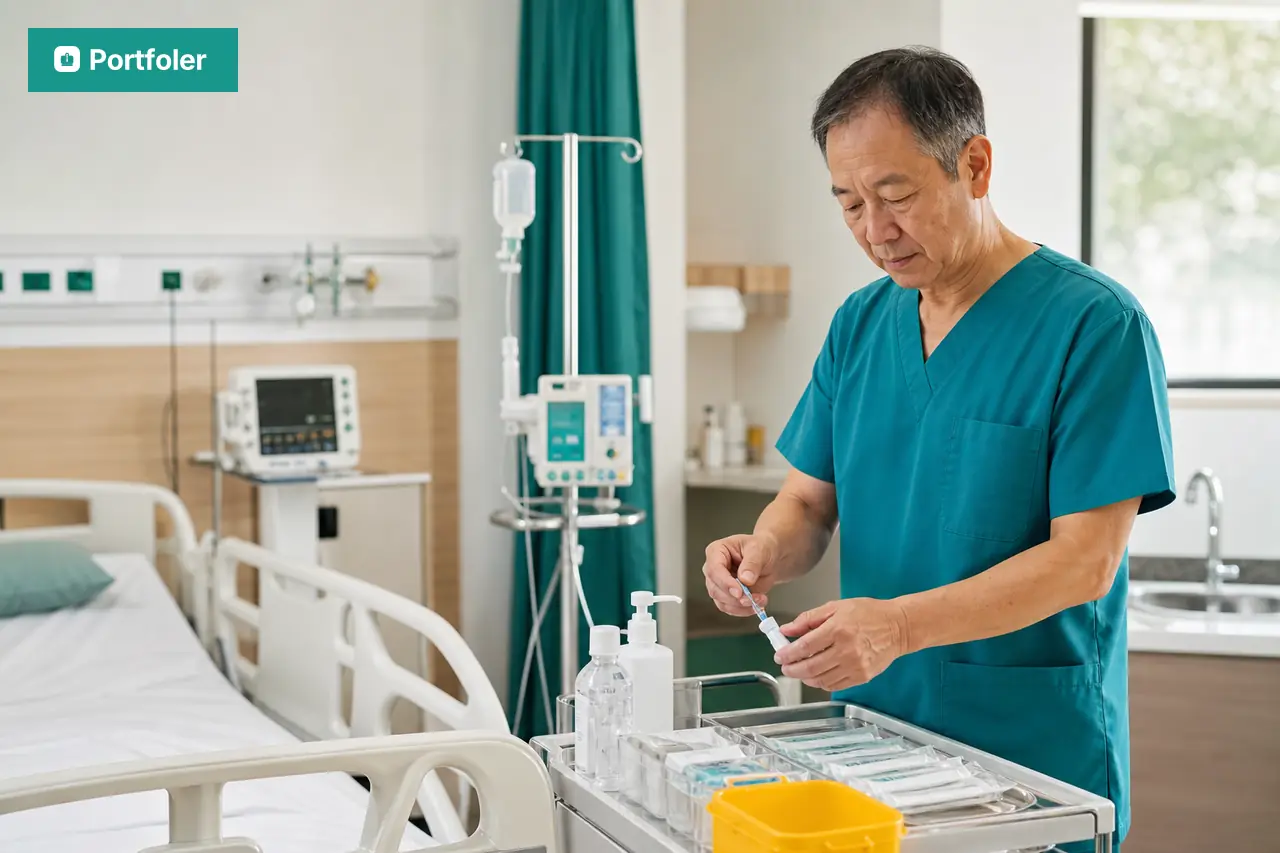
The registered nurse is at the heart of the healthcare system. They support patients day to day, administer treatments and bridge the gap between doctor and patient. An essential, human role facing a talent shortage everywhere in the world.
Role overview
The registered nurse delivers care, monitors patients' health and carries out medical prescriptions. Working in hospitals, clinics, private practices or at home, they are a central player in the chain of care.
Beyond technical procedures, they reassure, listen to and educate patients. Amid an ageing population and a global strain on healthcare jobs, it is one of the most sought-after profiles in the world.
Key responsibilities
- Provide nursing care (dressings, injections, IV therapy, sample collection).
- Administer treatments and monitor their effects.
- Monitor vital signs and patients' clinical condition.
- Carry out medical prescriptions and raise the alarm in emergencies.
- Keep the patient record up to date and ensure care traceability.
- Support and educate patients and their families.
- Follow hygiene, asepsis and safety rules.
- Collaborate with the medical and paramedical team.
Required skills
Hard skills: nursing care, medication administration, clinical monitoring, emergency procedures, sample collection, patient record keeping, hygiene and asepsis, therapeutic education.
Soft skills: empathy, composure, physical and mental resilience, rigour, organisation, listening and teamwork.
Salaries around the world
A nurse's pay varies widely from country to country, depending on cost of living, the healthcare system and staffing pressure. The salary-by-country table below gives indicative annual gross ranges, in local currency, for a mid-level profile. International mobility is high in this profession: many countries actively recruit foreign nurses, often on attractive pay scales.
Career path
The role offers a clear progression, whatever the country:
- Registered nurse (0 – 3 years): general ward care, growing autonomy.
- Experienced / specialised nurse (3 – 8 years): specialisation (operating theatre, ICU, paediatrics, anaesthesia).
- Expert nurse / charge nurse (8 – 15 years): team supervision, coordination, clinical expertise.
- Senior manager / Director of Nursing (15+ years): leading the nursing function, with pay well above mid-level ranges.
Education & training
The profession is regulated and requires a recognised qualification:
- Nursing degree (Bachelor's level) or equivalent depending on the country.
- Specialisations (nurse anaesthetist, theatre nurse, paediatric nurse, advanced practice) after experience.
- Equivalences and exams to practise abroad (NCLEX in the USA, OSCE in the UK…).
The qualification is essential: it is a protected profession in most countries.
Opportunities & sectors
Nurses are hired everywhere: public and private hospitals, clinics, care homes, private practices, home care, occupational health, humanitarian work, cruise ships. Demand far exceeds supply in most countries, ensuring durable employment and strong mobility, including internationally.
In summary
An essential, human and universally sought-after role at the heart of care and health. If you combine technical skill with patient care, create your profile on Portfoler.com and attract the opportunities and recruiters that match your ambitions.
 United States
 United Kingdom
 Germany
 France
 Canada
 United Arab Emirates
 Morocco
 India
 Spain
 Australia
 Netherlands
 Brazil