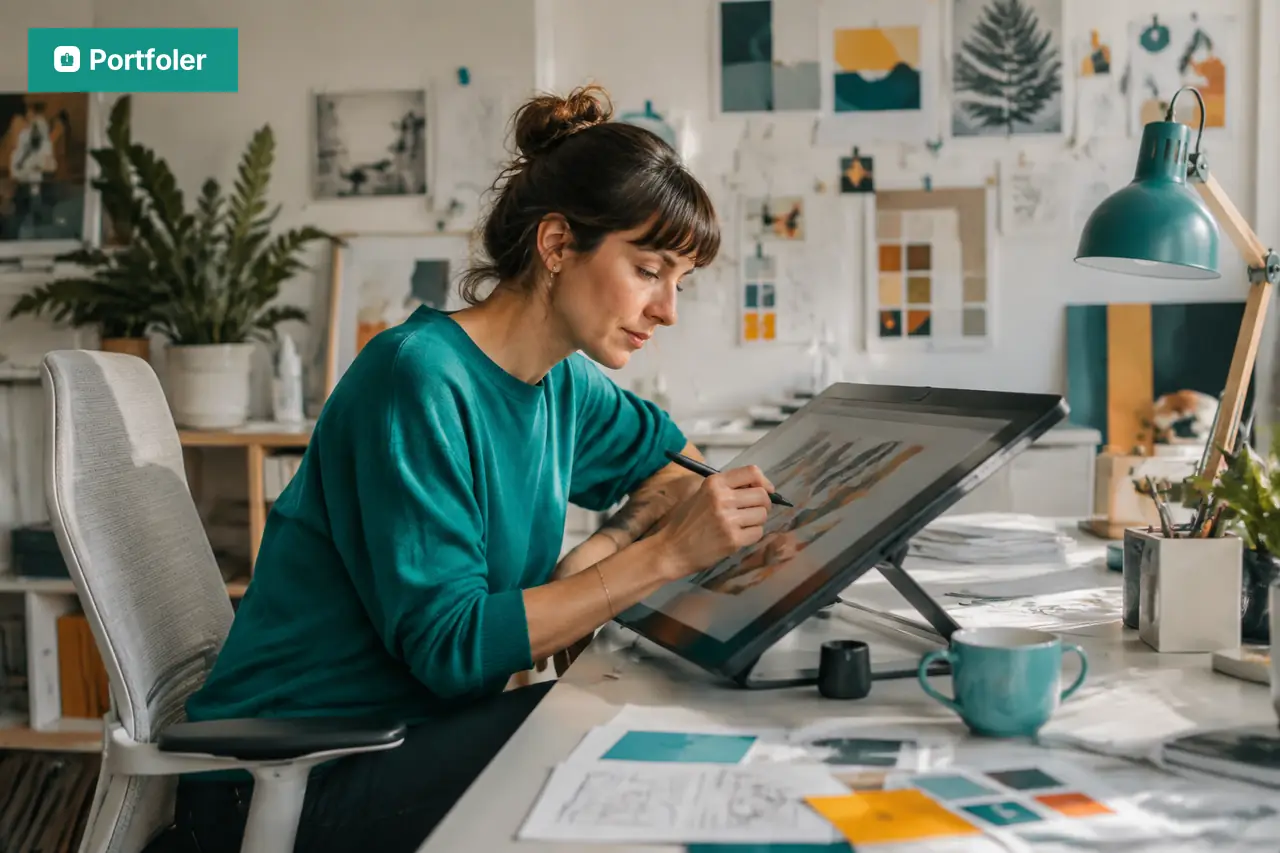
The Graphic Designer gives ideas a visual form. Logos, posters, packaging, brand guidelines, social media content: they turn a message and a brand identity into images that stick. It is one of the most universal creative professions, practised in agencies, in-house or on a freelance basis.
Role overview
The Graphic Designer creates visual communication materials from a client brief. They choose the colours, typefaces, imagery and composition that serve a precise goal: building brand awareness, selling a product, informing an audience.
Their playing field spans print (posters, brochures, packaging, publishing) and digital (banners, social media, newsletters, web design assets). Some specialise in brand identity, illustration, motion design or art direction. The job is very often done freelance, with a portfolio as the main business card.
Key responsibilities
- Analyse the client brief and put forward well-argued creative directions.
- Design visual identities: logo, palette, typography, brand guidelines.
- Produce print and digital materials, from first mock-up to final artwork.
- Prepare files for printing (registration, bleeds, colour profiles).
- Roll out a single identity across all of a brand's materials.
- Present and defend the work, then fold in client feedback.
Required skills
Hard skills: command of the Adobe suite (Photoshop, Illustrator, InDesign), typography, colour theory and profile management, layout, brand identity creation, knowledge of the print production chain, photo retouching and the basics of interface design.
Soft skills: creativity, an eye for detail, listening to the client's need, the ability to take criticism, and managing deadlines and priorities — especially as a freelancer.
Salaries around the world
A Graphic Designer's pay varies by country, status (employed or self-employed), sector and above all the quality of the portfolio. The salary-by-country table below shows indicative annual gross ranges, in local currency, across all levels. Refer to the table for market-by-market detail.
Career path
- Junior (0 – 3 years): producing variations, layout work, supervised by an art director.
- Mid-level (3 – 6 years): designing complete materials, direct client contact, creative autonomy.
- Senior / Art Director (6 – 10 years): setting the creative direction, leading a team, running campaigns.
- Creative Director (10+ years): the overall creative vision of an agency or a brand, with significantly higher pay.
The role also opens the way to UX/UI designer, motion designer, illustrator or starting an independent studio.
Education & training
Several routes lead into the role:
- Associate to Bachelor's level in graphic design, visual communication or applied arts.
- Master's level at an art or design school for those aiming at art direction.
- Short courses and bootcamps in design, followed by intensive practice.
- Self-taught with a strong portfolio — a fully accepted route in this profession.
The market looks at the portfolio first: the quality and consistency of the work shown weigh far more than the qualification.
Opportunities and sectors
Graphic Designers are hired by communication agencies, design studios, printers, in-house marketing departments, media, publishing and e-commerce. Every brand needs a visual identity. Freelancing is widespread, and remote work makes it possible to serve clients anywhere in the world.
In short
A creative, universal and enduringly in-demand profession, where talent is proven by the work rather than by diplomas. If your designs speak for you, create your profile on Portfoler.com, publish your portfolio and attract the clients and recruiters looking for your style.
 United States
 United Kingdom
 Germany
 France
 Canada
 United Arab Emirates
 Morocco
 India
 Spain
 Australia
 Netherlands
 Brazil