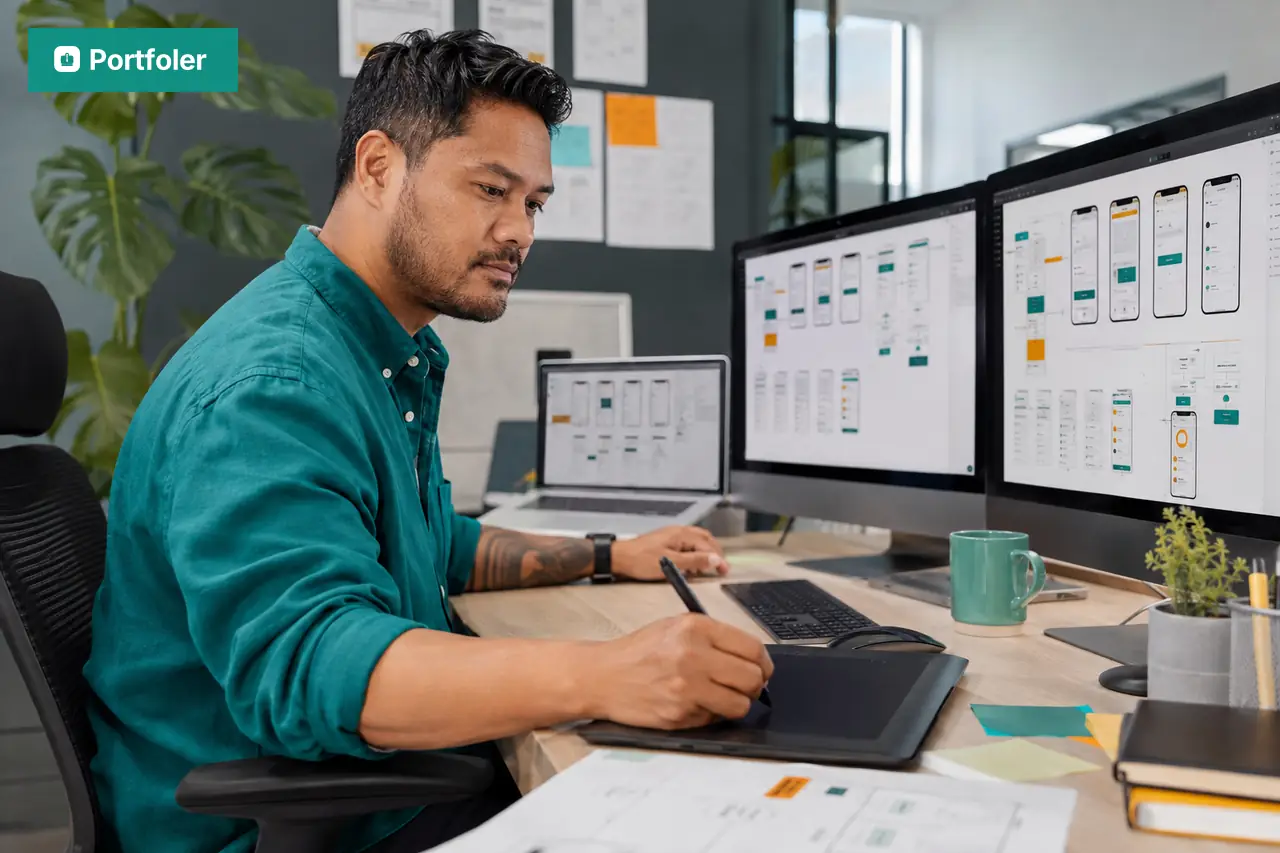
The UX/UI Designer sits at the heart of digital product design. They turn user needs into clear, enjoyable and effective interfaces. Blending design, psychology and technical craft, it is one of the most in-demand roles in the digital industry worldwide.
Role overview
The UX/UI Designer shapes both the experience (UX — *User Experience*) and the interface (UI — *User Interface*) of web and mobile applications. The UX side covers user research, information architecture and user journeys; the UI side covers the visual layer: colours, typography, components and motion.
Depending on the company, the role may be unified (a single UX/UI profile) or split into two distinct roles (UX Designer / UI Designer). Startups and SMEs value versatility; large organisations tend to favour specialisation.
Key responsibilities
- Conduct user research (interviews, personas, needs analysis).
- Design user journeys, wireframes and interactive mockups.
- Build and maintain a consistent, reusable design system.
- Create prototypes and run usability testing.
- Ensure accessibility (WCAG) and responsive consistency across screens.
- Collaborate closely with product and engineering teams.
Required skills
Hard skills: proficiency in Figma (or Sketch/Adobe XD), wireframing and prototyping, design system design, user research, usability testing, WCAG accessibility, and a working knowledge of HTML/CSS and front-end constraints.
Soft skills: user empathy, active listening, the ability to defend design decisions with clear rationale, curiosity, rigour and cross-functional collaboration.
Salaries around the world
A UX/UI Designer's pay varies widely by country, cost of living and the maturity of the local digital market. The salary-by-country table below shows indicative annual gross ranges, in local currency, for a mid-level profile. Refer to the table for market-by-market detail.
Career path
- Junior (0 – 2 years): producing mockups under supervision, contributing to the design system.
- Mid (2 – 5 years): autonomy on full products, leading research and testing.
- Senior (5 – 8 years): product vision, design trade-offs, mentoring juniors.
- Lead / Head of Design (8+ years): managing a design team, strategy and art direction, with significantly higher pay.
Education & training
Several routes lead into the role:
- Bachelor's to Master's in design, digital design, art or communication schools.
- Intensive UX/UI bootcamp (3 to 6 months) followed by hands-on experience.
- Career change from graphic design, front-end development or marketing, backed by a strong portfolio.
The market values a portfolio that demonstrates a process (problem → research → solution → impact) far more than a degree alone.
Opportunities and sectors
UX/UI Designers are hired across every sector: software vendors (SaaS), e-commerce, fintech, digital agencies, healthcare, media and the public sector. The role is also very well suited to freelancing and remote work.
In short
A strategic, creative and highly sought-after role at the intersection of the user, the product and technology. If you design digital experiences that make a difference, create your profile on Portfoler.com, showcase your portfolio and attract the recruiters and projects that fit you.
 United States
 United Kingdom
 Germany
 France
 Canada
 United Arab Emirates
 Morocco
 India
 Spain
 Australia
 Netherlands
 Brazil