"Advanced Excel." "Fluent in Angular." On a CV, these phrases cost nothing to write — and that's exactly the problem. A recruiter reads them ten times a day with no way to check them. A skills test changes that: it turns a claim into measurable proof. Here's how to use one to stand out before the first interview even begins.
A claimed skill no longer convinces
Everyone writes "advanced": the word has lost its meaning. A recruiter can't test every candidate in an interview, so they cut in case of doubt.
- An unverifiable CV line carries almost no weight in the decision.
- A proven level removes the doubt and moves you ahead of profiles that look identical on paper.
- It's a decisive edge when your experience is still short.
What a skills test really proves
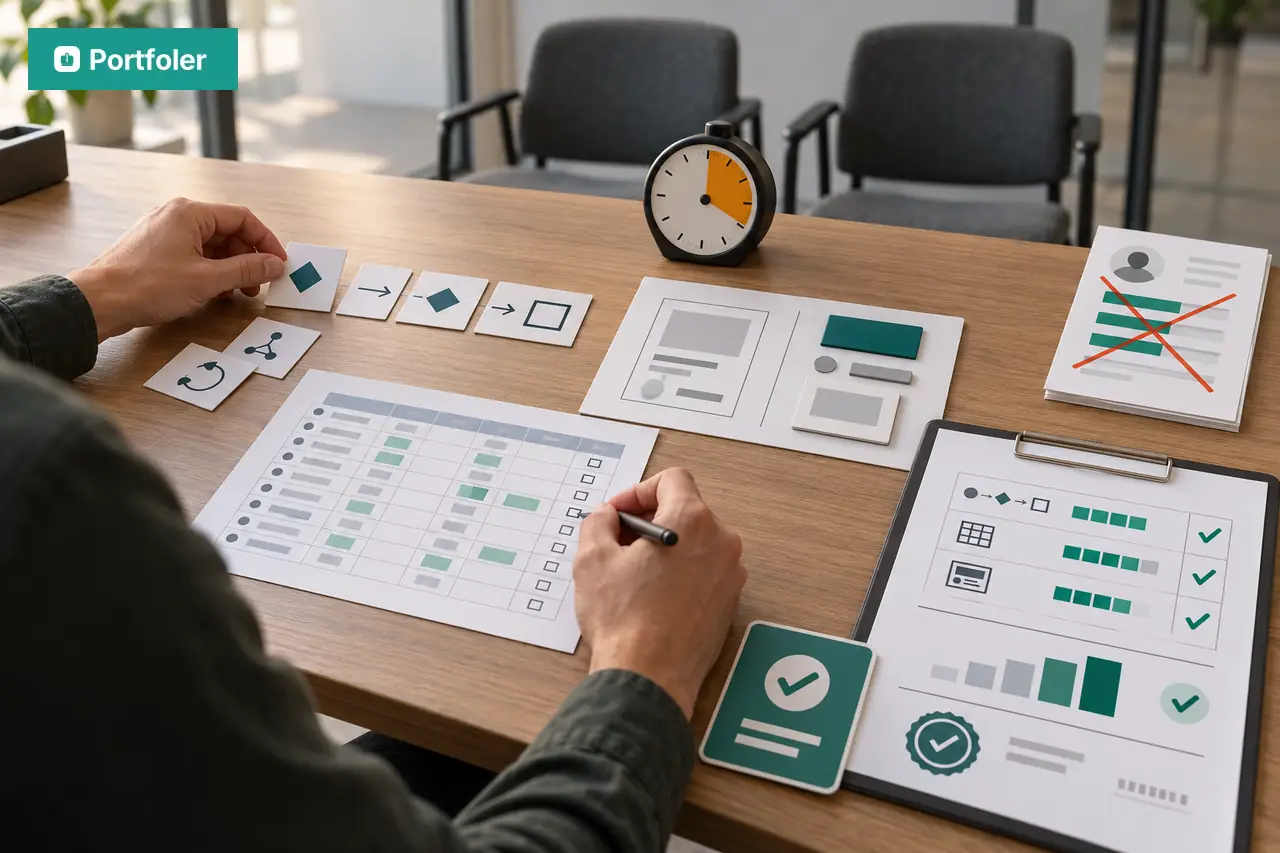
A good test doesn't measure your memory; it measures your ability to answer correctly, in your field, at your level.
- An objective score, graded on the server: no flattering self-assessment.
- A test matched to the target level (beginner, junior, senior): a senior doesn't take the same quiz as a beginner.
- A dated, factual result — far more credible than a decorative progress bar.
Prepare and take the test well
- Pick the test that matches the role you want, not the one where you're sure to shine.
- Review the fundamentals: most questions are about everyday practice, not trick questions.
- Find a quiet spot: a test is a few minutes of focus.
- You can retake a test to improve your score — use it to grow.
Show the result in the right place
Taking a test is pointless if it stays hidden.
- You decide, result by result, whether to make it public or private.
- The tests you make public appear on your profile, visible to recruiters.
- Gathered in the right place, they become an argument: this candidate didn't just say they could — they proved it.
In short
A skills test turns an unverifiable CV line into concrete proof. Objective score, level-appropriate, displayed where recruiters look: it's a credibility shortcut.
On Portfoler.com, take skills tests, choose which ones to make public and display them on your profile — so you walk into the interview one step ahead.