"I have no experience, so I have nothing to show." It's the excuse that blocks the most beginners — and it's false. A portfolio doesn't prove your seniority: it proves what you can do. School projects, personal exercises, volunteer work: anything can become proof. Here's how to build a convincing portfolio when you're just starting out.
What matters isn't experience, it's proof
A recruiter isn't looking for a long CV: they're looking for certainty that you can do the job.
- A completed project, even a personal one, beats a self-declared skill.
- Quality over quantity: three good projects are enough to start.
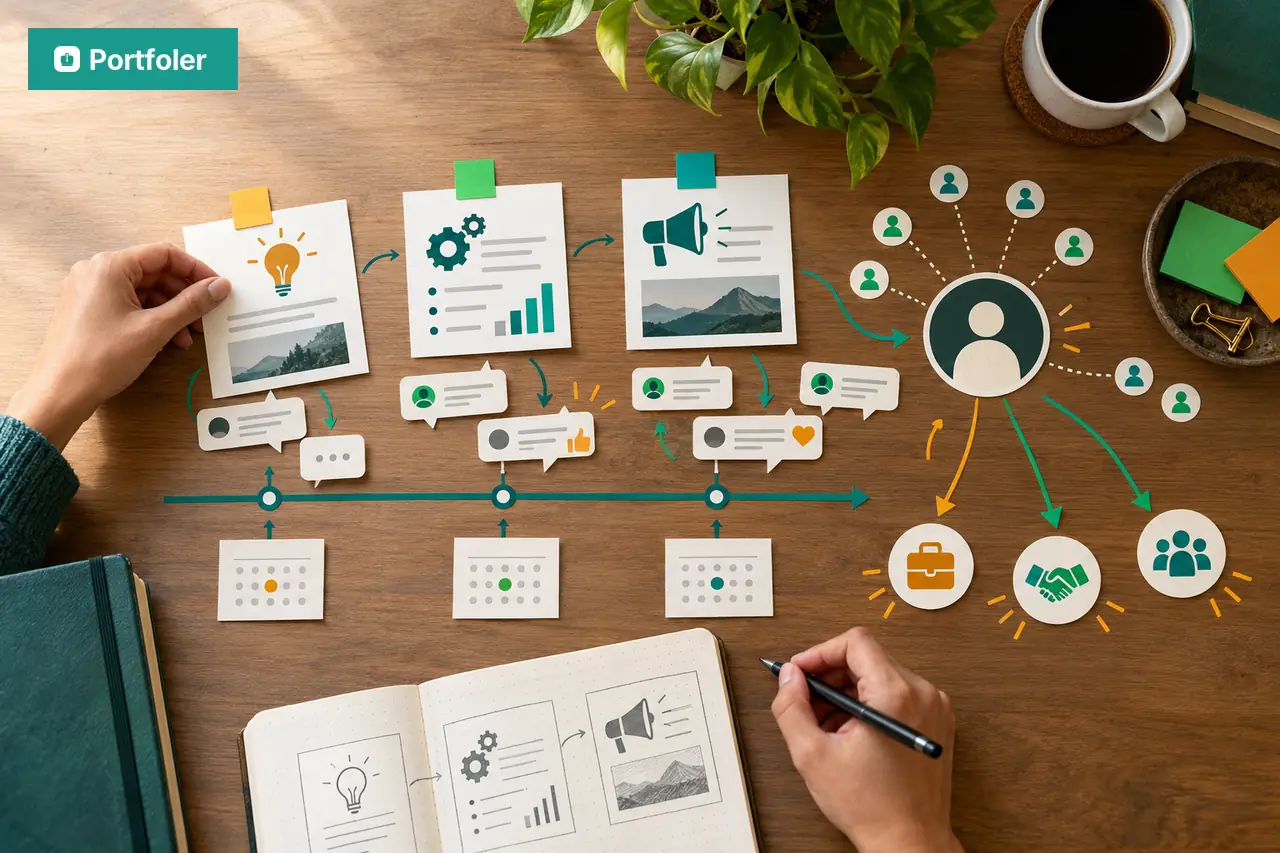
- Show the result AND the process: it's how you think that reassures.
Where to find projects when you have "nothing"
You have more material than you think.
- Study, training or career-change projects: own them fully.
- Personal exercises: recreate, improve, invent to prove a skill.
- Volunteer, nonprofit or favor-for-a-friend work: a real need, a real deliverable.
Presenting a project so it convinces
A poorly presented project reads as a rough draft.
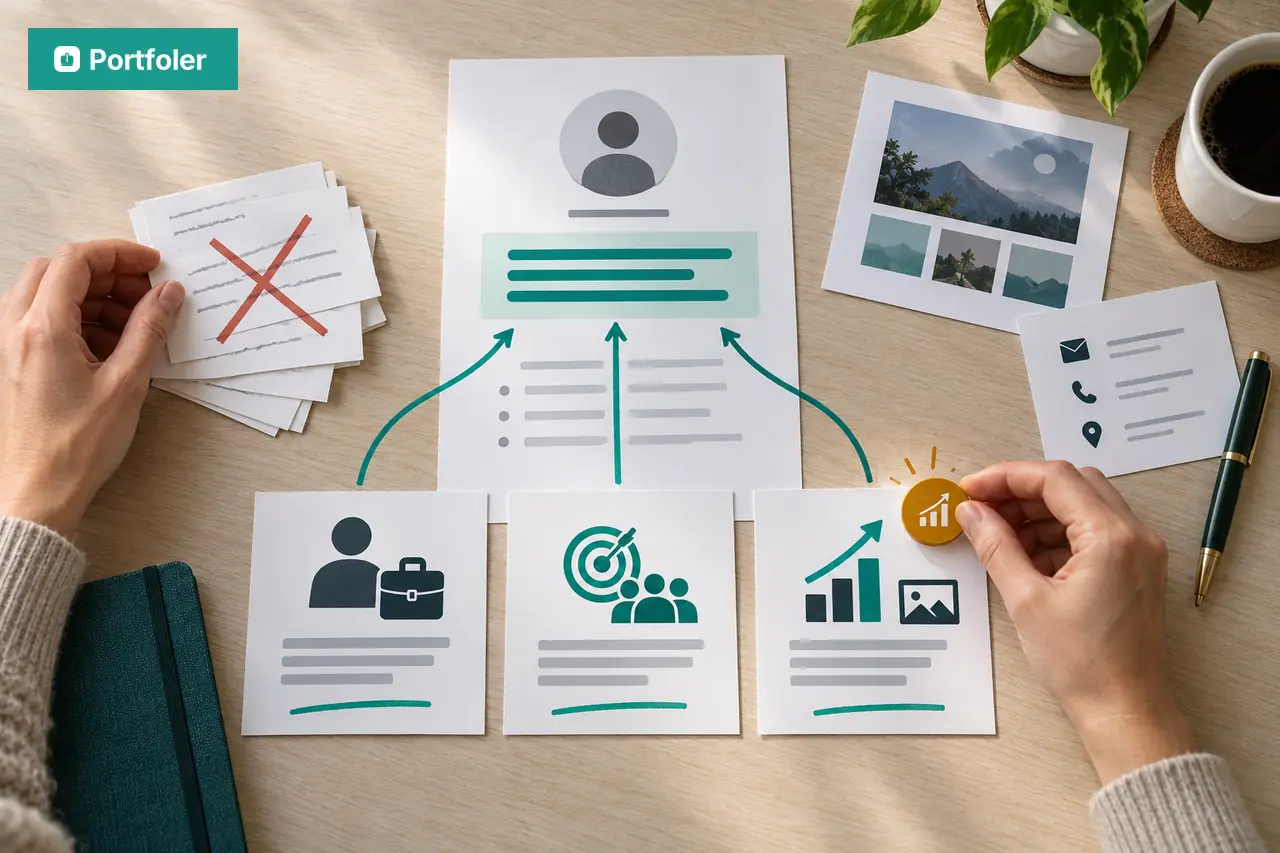
- Context: what problem, for whom, under what constraints.
- Your role and choices: what YOU did, concretely.
- Result: a visual, a number, feedback — proof that it worked.
Owning your beginner status
Hiding inexperience shows; owning it inspires trust.
- Don't inflate anything: a recruiter spots lies, not modesty.
- Highlight your progression and your eagerness to learn.
- A polished portfolio, even a short one, already proves you're serious.
In short
Starting out isn't a handicap if you turn what you've done — studies, exercises, volunteering — into well-presented proof. A clear, honest, result-focused portfolio beats a thousand "motivated beginner" lines on a CV.
On Portfoler.com, gather your projects into an online portfolio, tell the story of each one and share it in a single link — to show what you can do, even without years of experience.